Jane is a high school student who got pregnant unexpectedly. Living in a rural area, Jane struggles to find care to stay healthy and assess her options.
Jane's Journey
Jane is a 15-year-old high school student who missed her period after having sex.
She starts to worry. She’s scared and didn’t think this could happen to her.
Jane searches high and low for a local doctor to assess her options, but due to doctor shortages in her rural town, she must travel to the city for care
* 35% of Georgia counties lack maternity care options.(Source →)
×
After weeks of saving up, Jane can finally take a taxi to the city. But when she arrives, she finds out she is just a few days over Georgia’s limit (banning most abortions after about six weeks). She cannot get care in Georgia.
Jane returns to her town defeated. Without the resources to travel outside her state for care, she has no choice but to continue the pregnancy.
Unfortunately, she cannot afford to travel into the city for prenatal care appointments either, so she cannot afford the care needed to keep her pregnancy or herself healthy.
These circumstances put Jane at risk for postpartum depression (PPD), but she has no one to turn to for assistance.
* Mental health conditions like PPD make up 23% of all maternal mortality deaths.(Source →)
×
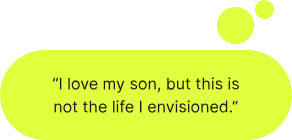
After giving birth, she drops out of school and continues to feel hopeless. She works low-wage jobs to provide for her and her son.
What makes Jane’s pregnancy high-risk?
Young people face higher health risks during pregnancy, such as preeclampsia, and are also more likely to experience financial stress and postpartum depression after giving birth. People who already struggle with depression or anxiety before pregnancy are at greater risk of developing postpartum depression—but under Georgia’s abortion law, mental health conditions are not considered valid reasons for an exception.
Many young people still choose to continue with high-risk pregnancies. When they do, it’s essential that they have access to the care and support needed for a healthy pregnancy, safe delivery, and strong recovery afterward. But it’s equally important that people like Jane have the right to make their own decisions about what level of risk they can accept, based on their individual lives—and to get the abortion care they need when they determine that risk is too high.
The story doesn’t stop here.
Looking for additional resources, ways to take action, or want to reach out for press?